Job Scams: How to Spot the Fakes and Verify the Real Opportunities
Job Scams: How to Spot the Fakes and Verify the Real Opportunities
Let's talk about a hot topic in the job search world right now: scammers.
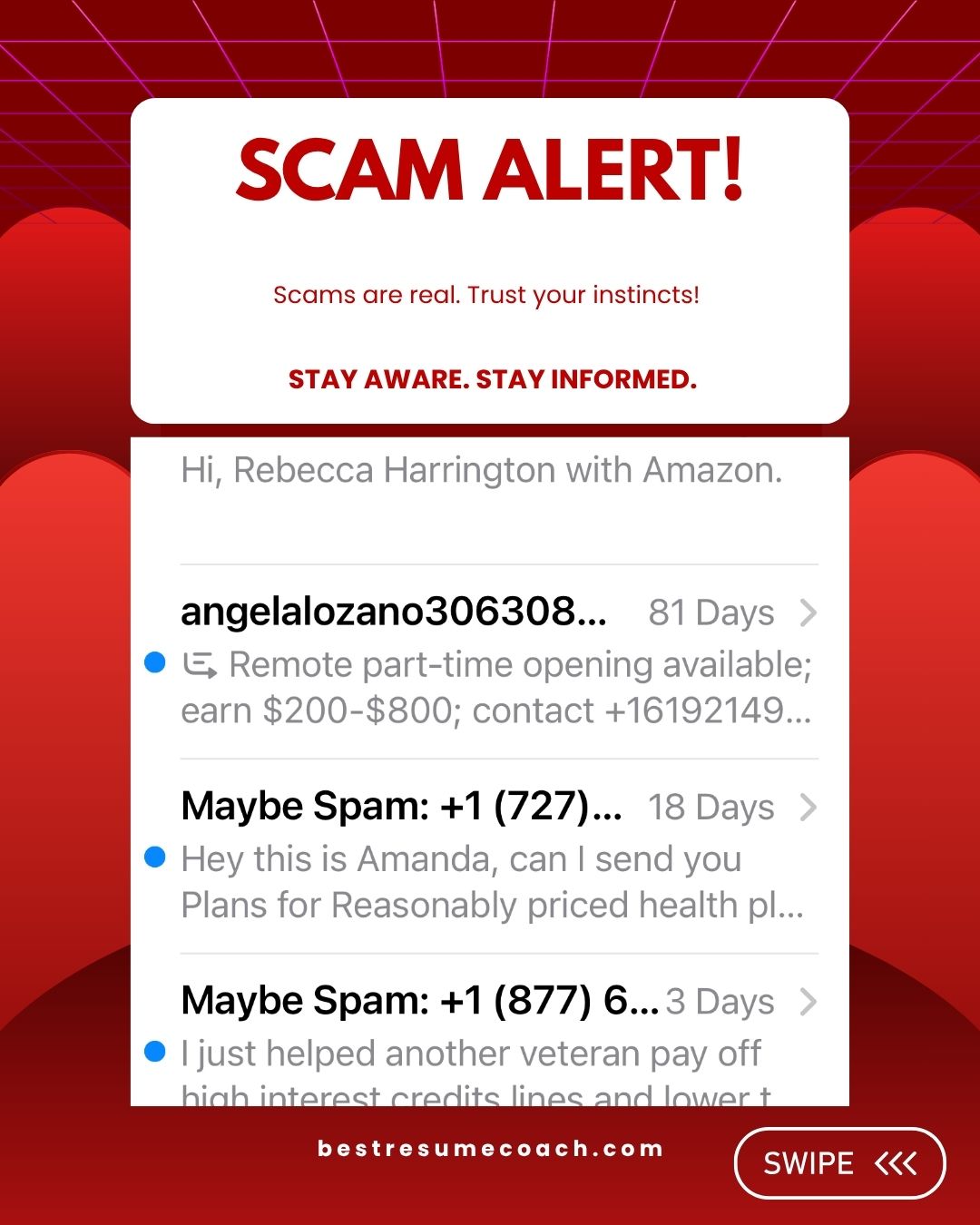
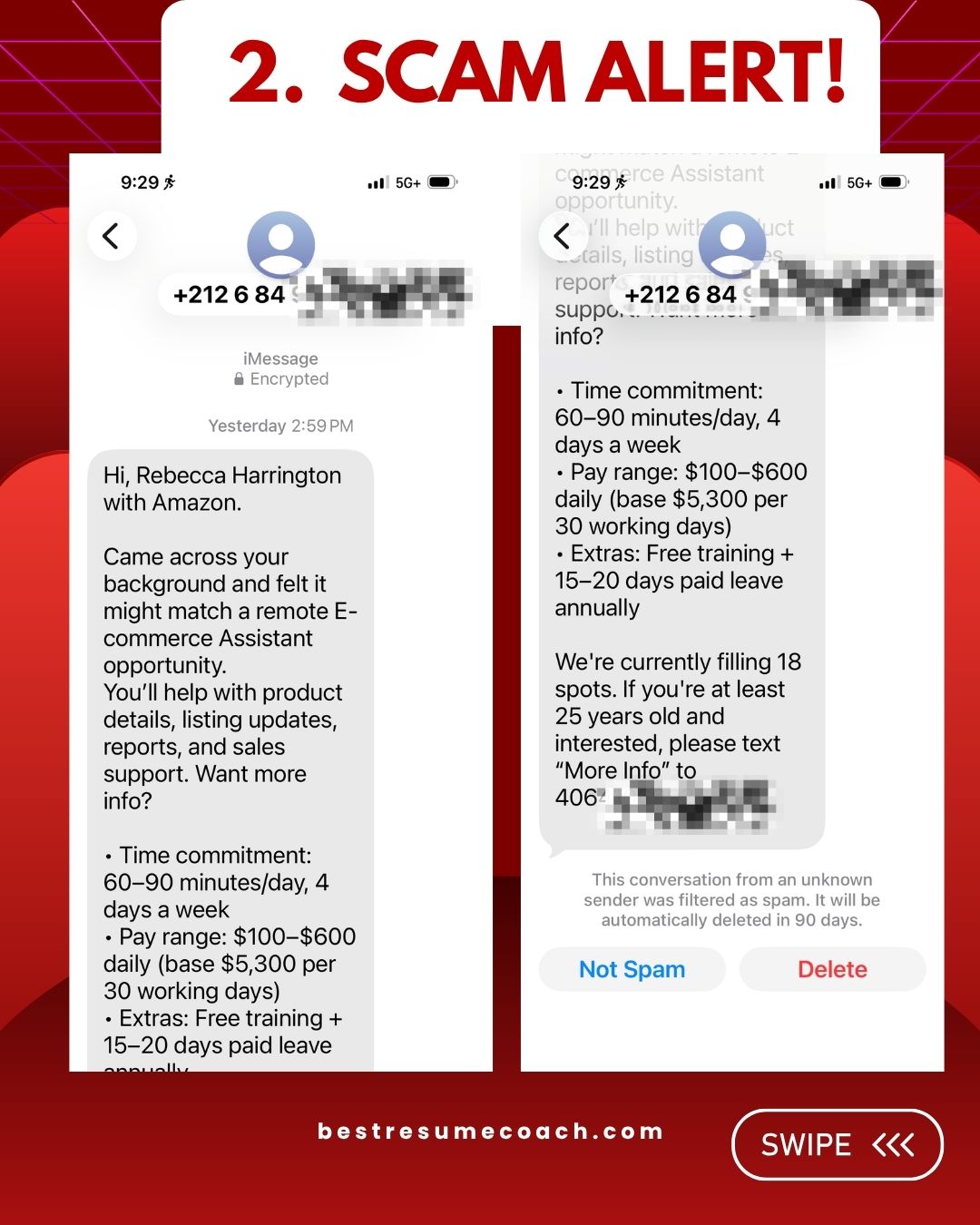
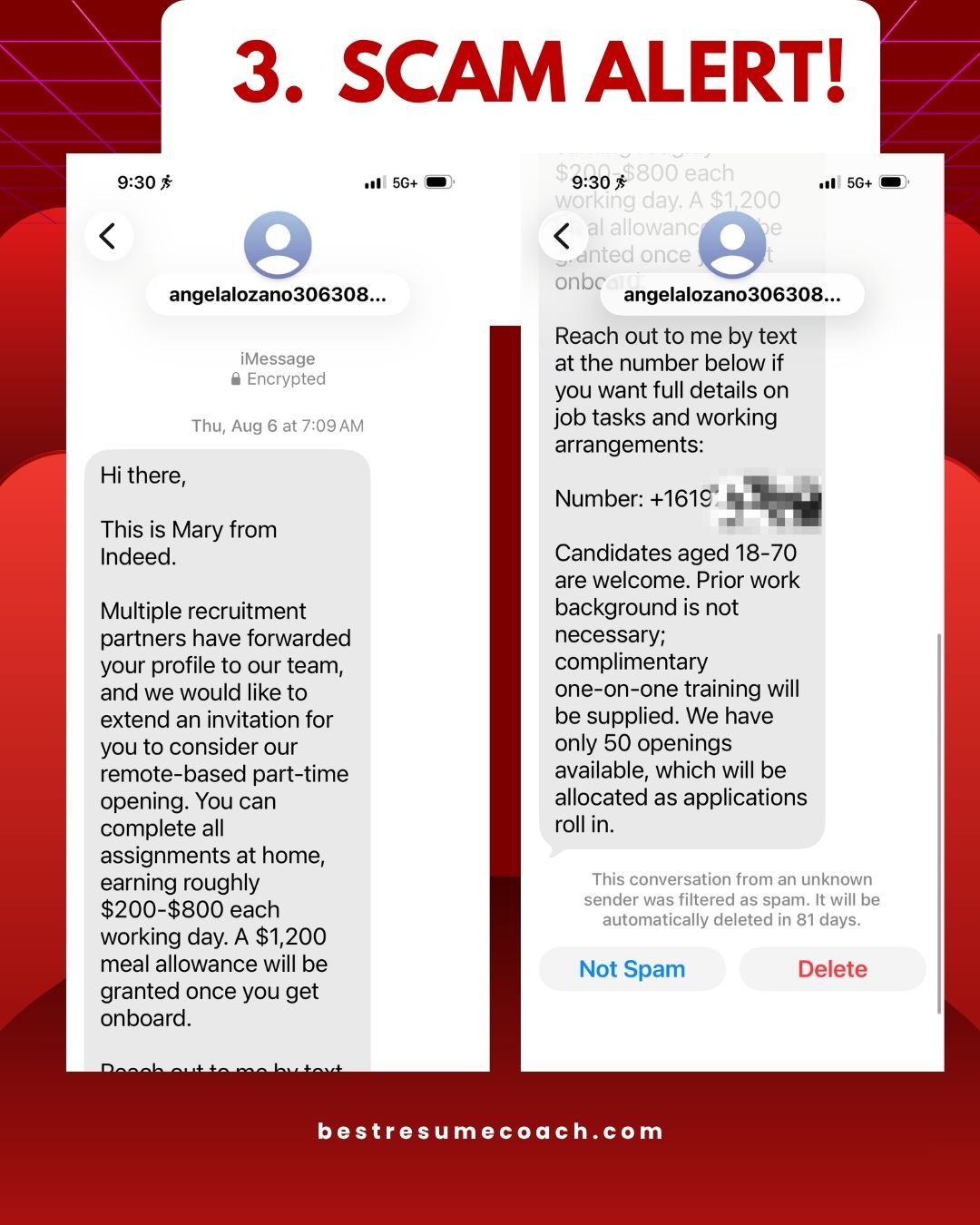
I recently got a text that was so obviously a job scam. They're getting bolder. Unfortunately when you're job searching and hopeful, they prey on exactly that. So let's protect your energy (and your info).
Watch for these red flags
Sketchy contact info. Texts or emails from unknown senders with random letters/numbers, or an address that doesn't match the company (not a real company domain).
Sounds too good to be true. It probably is. Minimal hours, no experience needed, and shockingly high pay? That's the bait. Real jobs don't work that way.
They rush you. Urgency ("respond in the next hour!") and pressure to move to a different app (Telegram, WhatsApp, personal text) are big warning signs.
They want your money or info. Real recruiters, headhunters, and hiring managers will NEVER charge you money to find a job or land an interview. No legit employer needs your bank details or SSN before you're even hired.
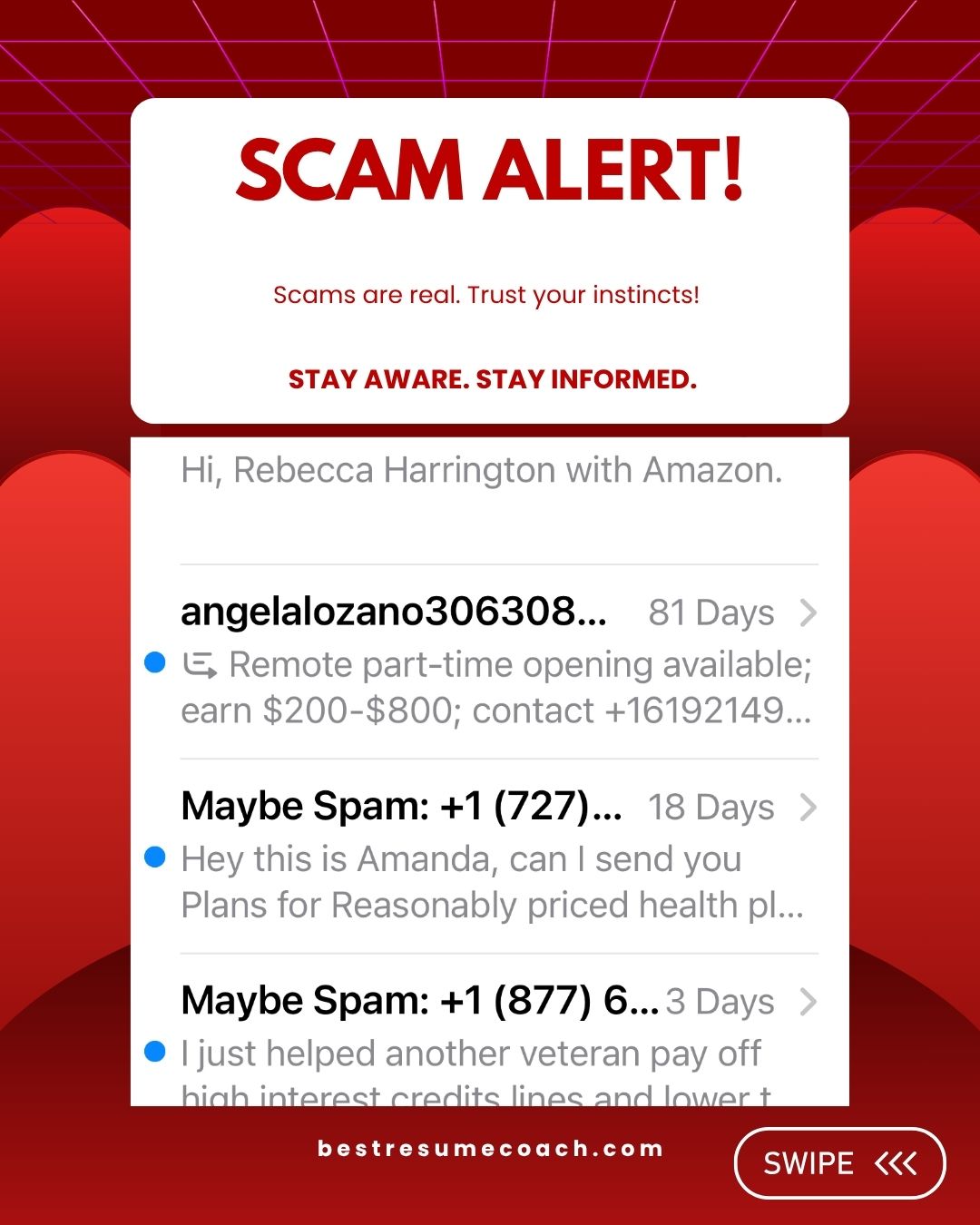
These scammers also tend to target military veterans, as you can see from these examples of my real text messages. Watch out! Stay aware so you can protect yourself and your colleagues.
What to do: Report as spam and delete (you can do this right on your phone and in your email). Don't reply. Don't click links.
Be diligent. Ask questions. Trust your gut-level intuition. If something feels off, it is.
Save your energy for the real opportunities out there, because they're worth it. 💛
Keep reading for more below about how to spot a real opportunity...
How to verify a real opportunity
We spotted the scams. Now: how to verify a real opportunity.
Not every unexpected message is a scam. Real recruiters do reach out. Here's how to tell the difference before you get excited (or spooked):
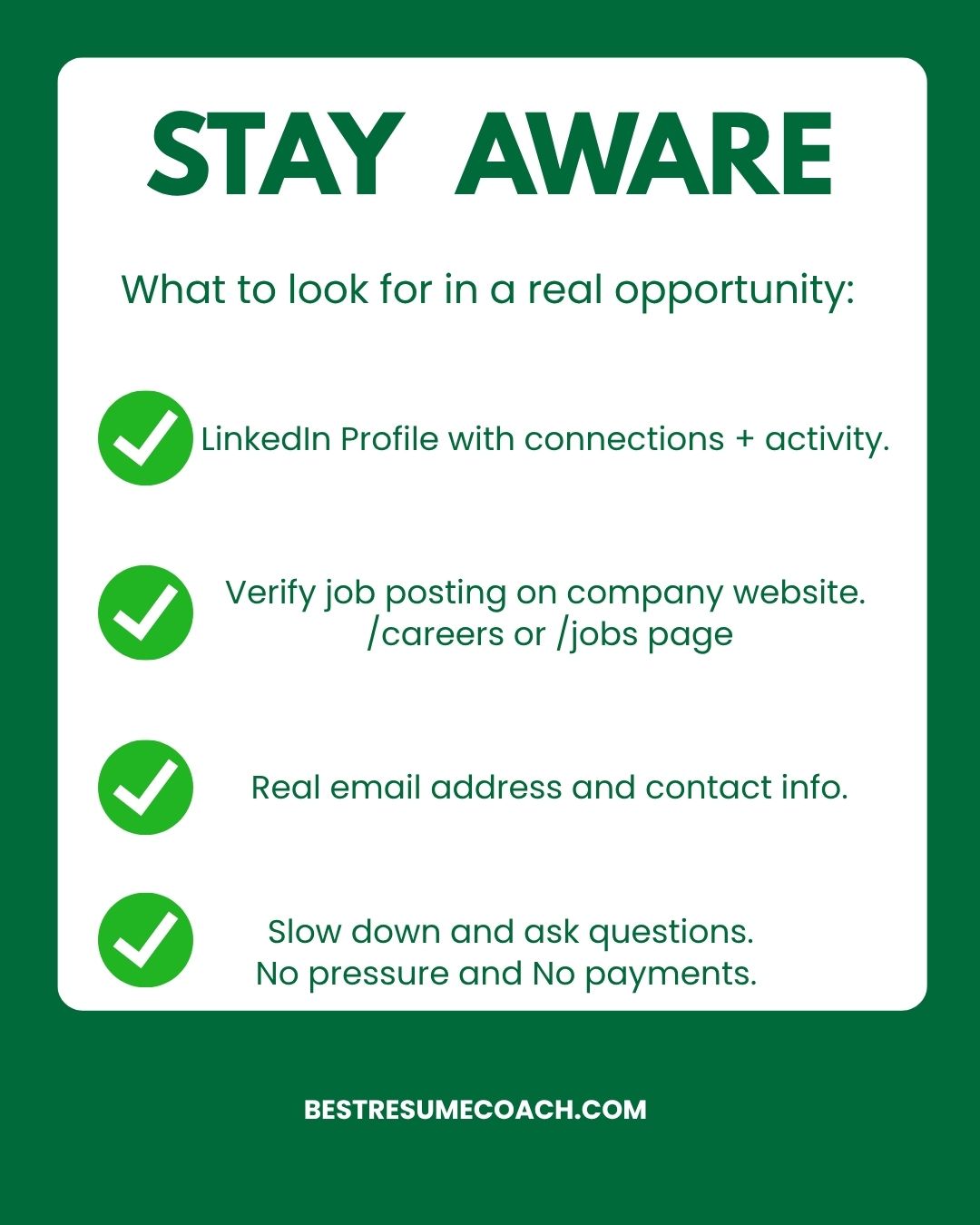
Look them up on LinkedIn. A real recruiter has a real profile, with a photo, history, and mutual connections. Watch for catfishing 🐟 Scammers will impersonate real people, so check that the details add up. Someone who claims years of experience at a big-name company would naturally have hundreds of connections. If they say they're seasoned but the profile has 2 connections and no activity or recommendations? That's a red flag waving at you.
Check the company directly. Go to the actual company website and careers page (company.com/careers or company.com/jobs). Type it yourself, don't click their link, and see if the job is posted there. Although sometimes it can be a LinkedIn Easy Apply, the majority of companies will show open roles on their careers page. That may link to Greenhouse, Workday, or another platform and that's okay.
Verify the email domain. Legit recruiters email from the company domain ([email protected]), not @gmail or a string of random letters.
Ask direct questions. "What's the full job title? Who's the hiring manager? Can we schedule a call through the company?" Scammers get vague, defensive or vanish. Real people answer.
Slow it down. A real opportunity can wait a day while you check. Anyone pressuring you to act right now is waving a flag.
The theme this week? Trust your gut, then verify with your head. Both matter. 💛
Hi, I'm Jennifer Anne Garcia ✨ Career Strategy Coach and author of "Best Resume Recipe." Helping seasoned professionals turn transition into transformation. Love & Light & Lazer Laser Beams. 💖